Celebrating World Smile Day: The Science of Smiling and Your Mental Health
October 2nd is World Smile Day, and at Well Workshop Psychological Services, we are taking a moment to highlight how a simple smile can influence your mental and physical health. Smiling is far more than an outward display of emotion; it is an embodied social act with profound effects on psychological well-being and stress regulation.
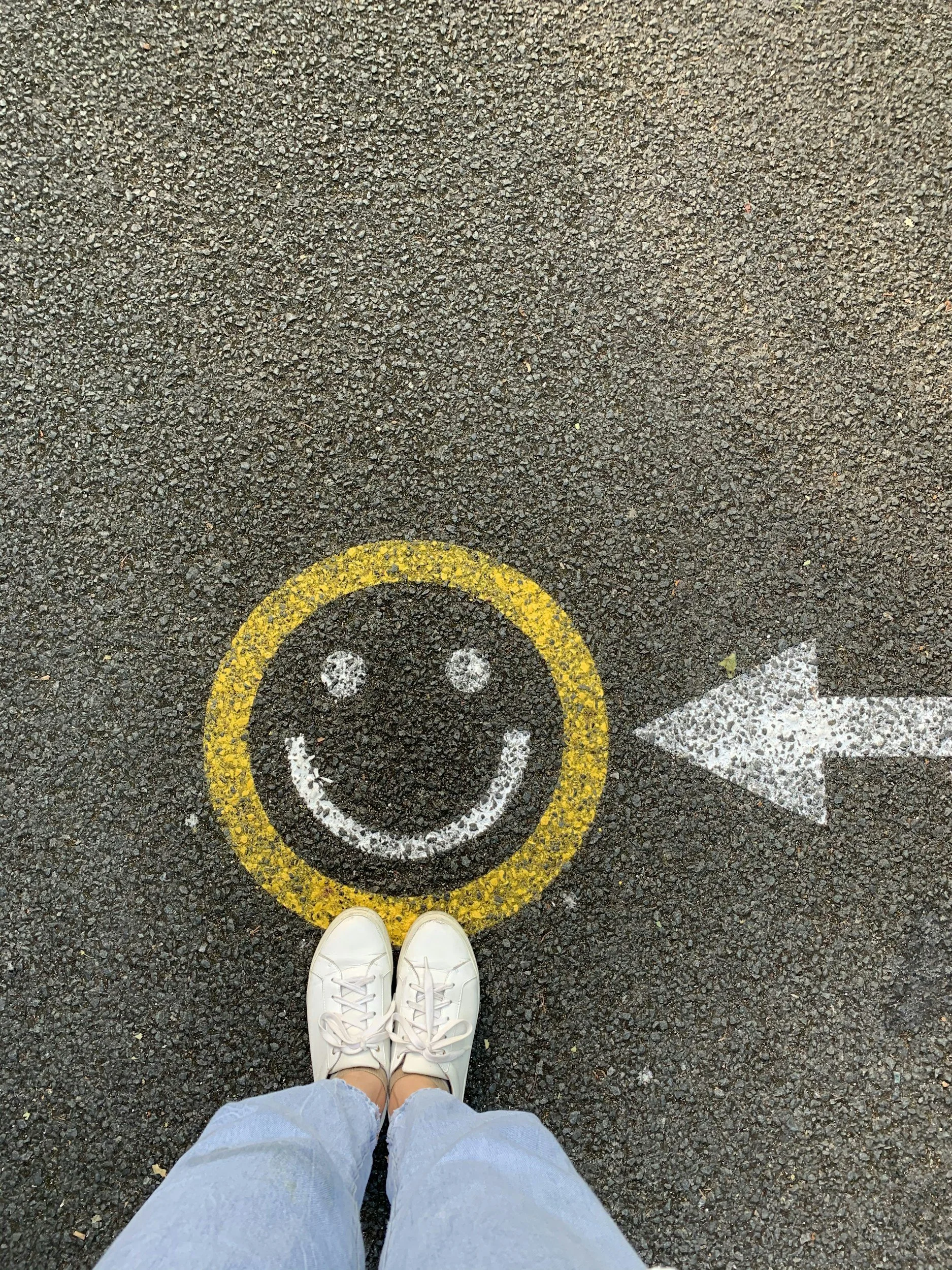
Recent scientific research reveals that the act of smiling, whether spontaneous or deliberate, triggers a cascade of mental and physiological benefits.
5 Ways Smiling Boosts Your Mental Health
Shifts Brain Perception via Facial Feedback: Research shows that voluntary facial muscle movement alters neural processing through facial feedback. An electroencephalography (EEG) frequency-tagging study revealed that posing a smile reduces neural discrimination between happy and neutral faces, prompting the brain to perceive neutral expressions as happier.
Buffers Physical Stress and Heart Rate: Spontaneous smiling during physical pain or acute stress lowers heart rate responses during stress and recovery. Smiling also boosts positive affect during recovery, serving as a natural physiological and psychological stress buffer.
Spreads Joy Through Primitive Emotional Contagion: Smiles spread automatically between individuals through primitive emotional contagion. Rapid facial mimicry allows observers to mirror happiness within seconds, evoking positive feelings and mutual connection.
Builds Social Trust and Attraction: Genuine smiles hold high subjective reward value (utility), capturing visual attention and prompting faster smile reciprocity. Imitating happy expressions directly enhances social trait judgments, making people appear more trustworthy, friendly, and attractive.
Strengthens Relationships Through Smile Synchrony: Smile synchrony, the mutual reciprocation of positive facial expressions, acts as a crucial nonverbal indicator of relationship satisfaction and partner responsiveness in romantic couples.
Simple Daily Habits to Harness Your Smile
Practice Gratitude: Expressing sincere appreciation enhances the perception of meaningfulness in daily interactions.
Share Micro-Moments of Connection: Returning another person's smile strengthens interpersonal trust and emotional alignment.
Use Smiles During Stress: Posing a smile during stressful tasks can cushion your cardiovascular response and encourage positive affect.
This World Smile Day, take a moment to share a genuine smile, it is a low-cost, high-reward investment in your emotional well-being!

Follow us on social media to see our LOLness Friday posts and smile!
References
Baker, J., Van der Donck, S., Boets, B., & Korb, S. (2025). Increasing perceived happiness in neutral faces by posing a smile: An electroencephalography (EEG) frequency-tagging study. Emotion, 25(6), 1596–1604.
Heerey, E. A., Clerke, A. S., Johnson, N. J., & Patenaude, J. (2024). The subjective value of genuine smiles guides real-world social behaviour. PLoS ONE, 19(6), e0304726.
Hofmann, V., Stokburger-Sauer, N. E., & Wetzels, M. (2024). The role of a smile in customer–employee interactions: Primitive emotional contagion and its boundary conditions. Psychology & Marketing, 41(11), 2181–2196.
Kettle, J., & Warren, L. (2024). Capturing the smile: Exploring embodied and social acts of smiling. Sociology of Health & Illness, 46(8), 1626–1646.
Luu, J. H., Acevedo, A. M., Pourmand, V., & Pressman, S. D. (2025). The power of smiles: Mitigating pain through facial expression. The Journal of Positive Psychology, 21(2), 321–330.
Machluf-Ruttner, R., Sbarra, D. A., Shahar, B., Sofer, C., & Bar-Kalifa, E. (2025). The dance of smiles: Comparing smile synchrony in nondistressed and therapy-seeking couples. Emotion, 25(4), 841–852.
Olszanowski, M., Tołopiło, A., & Hess, U. (2026). Smile and the world smiles (and trusts) with you: Happiness mimicry shapes first impressions. Emotion, 26(2), 495–512.
Zhang, Y., Zhu, Y., Qiang, Y., & Huang, Z. (2025). A ‘thanks’ from customers energizes employees to service with smile: The roles of work meaningfulness and work role salience. Current Psychology, 44(12), 10468–10481.