Stuck in the Test Anxiety Loop? Here’s How to Break Free
Does your mind go blank the second a test paper hits your desk? You aren’t alone. Research shows that nearly 48% of students experience exam anxiety. It isn't just "stress", it is a complex mix of physical tension, intrusive worries, and a "vicious cycle" where lower grades lead to higher anxiety, which then makes it even harder to study.
For students with ADHD, this can feel even more overwhelming. When you worry, your working memory, the "mental scratchpad" you need to solve problems, gets crowded with negative thoughts, leaving no room for the actual answers.
The good news? Test anxiety is a skill-based challenge, not a lack of intelligence. Here are five evidence-based strategies to help you reset your brain.
1. Try the 25-Minute "Brain Dump"
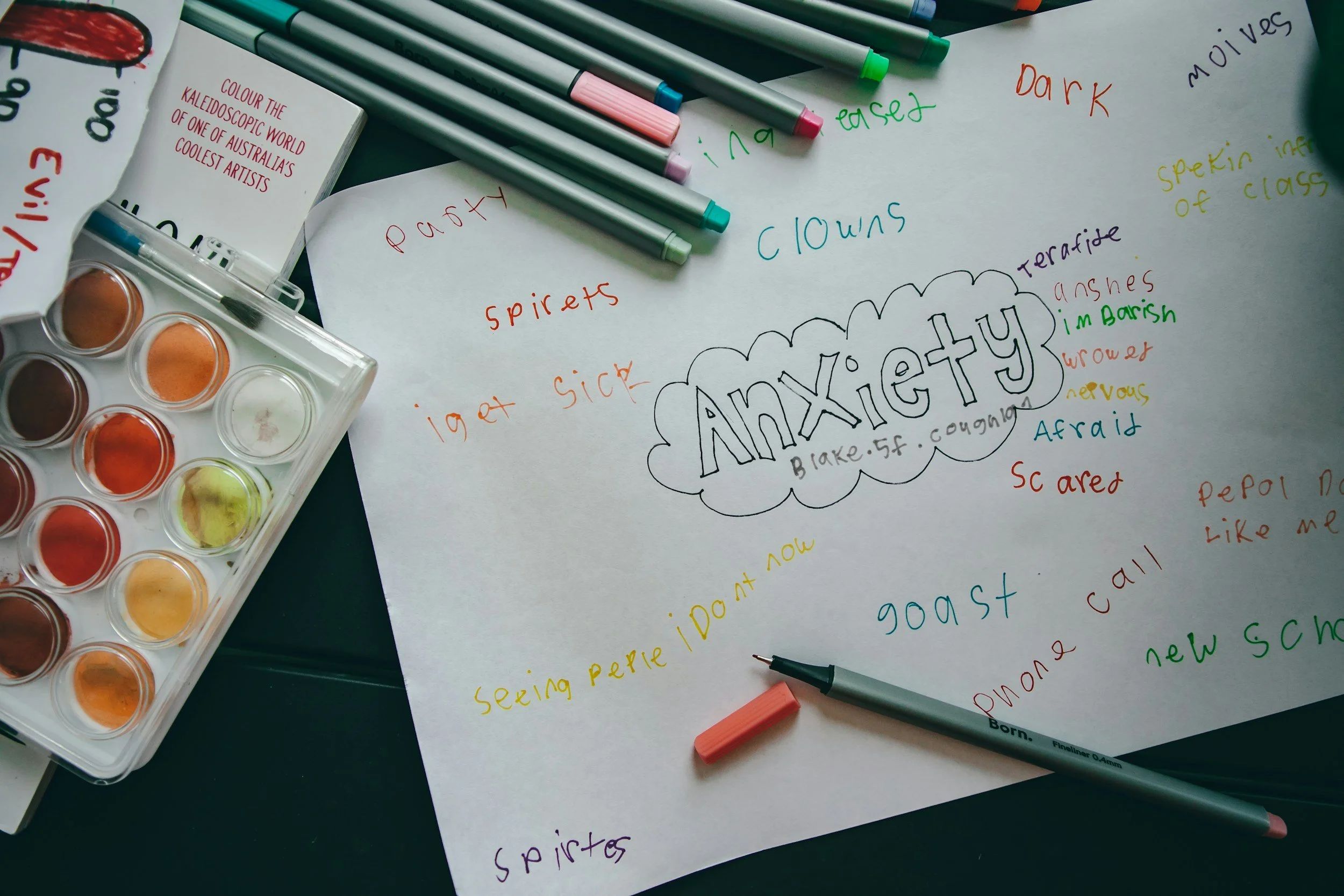
Before you even look at your notes, spend 25 minutes writing down your deepest fears about the exam. This is called Expressive Writing. By putting these abstract fears into words, you reduce their emotional power and "clear the cache" of your working memory so you can actually focus on the questions.
2. Use "If-Then" Planning
Anxiety thrives on uncertainty. You can outsmart this by using Implementation Intentions. Create a simple script for yourself:
"If I feel my heart racing during the test, then I will take three slow, deep breaths".
"If I see a question I don’t know, then I will move to the next one and come back later".
3. The 30-Minute Movement Reset
Research shows that just 30 minutes of moderate-intensity yoga before a test can significantly lower your perception of stress. Movement helps shift your nervous system from "Threat Mode" to a more balanced state, making it easier to retrieve information from your long-term memory.

4. Be Your Own Ally (Self-Compassion)
We often think being hard on ourselves will make us study more, but the opposite is true. High levels of self-criticism and shame actually increase test anxiety. Cultivating self-compassion—treating yourself with the same kindness you’d offer a friend—acts as a protective factor that improves your resilience and focus.
5. Flip the Script (Cognitive Reappraisal)
Instead of viewing a test as a "threat" to your self-worth, try to reframe it as an opportunity to show what you have learned. Remind yourself: "This exam is just a snapshot of my effort today; it does not define my future".
Take the Next Step
While sleep, nutrition, movement, and calming strategies play a powerful role in reducing test anxiety, how you study matters just as much. There are specific, evidence-informed study approaches that can significantly improve retention, confidence, and performance, especially for students who struggle with anxiety.
Well Workshop Psychological Services is hosting Test Anxiety Workshops to share these practical strategies in more depth. Whether you're looking for webinars or individual sessions, we are here to help you move from "Threat Mode" to "Growth Mode."
References
Ansari, S., & Iqbal, N. (2025). Prevalence of exam anxiety: A systematic review and meta-analysis. Canadian Journal of Behavioural Science / Revue canadienne des sciences du comportement. Advance online publication. https://dx.doi.org/10.1037/cbs0000473
Izmir, S. B. I., & Akyol, C. Ç. (2024). EMDR Flash Technique in adolescents with depression: A twelve-week follow-up study. Clinical Child Psychology and Psychiatry, 29(3), 949–965. https://doi.org/10.1177/13591045241247701
Naseri, N. J., & Marashian, F. S. (2025). The effectiveness of stress inoculation training on exam anxiety, distress tolerance, self-compassion, and academic self-efficacy in exam-anxious students. Journal of Psychologists and Counsellors in Schools, 35(2), 243–254. https://doi.org/10.1177/20556365251323356
Pires, C. P., Azevedo, J., Guiomar, R., Silva, E., Putwain, D. W., Hofmann, S. G., & Salvador, M. C. (2026). Acting with Acceptance, Mindfulness and Compassion to Cope with Test and Exam Anxiety (AcAdeMiC): Preliminary Efficacy From a Pilot Randomized Trial. Mindfulness. https://doi.org/10.1007/s12671-026-02816-8
Putwain, D. W., Nicholson, L. J., & Pekrun, R. (2026). Test anxiety, emotion regulation, and achievement: Lagged and contemporaneous reciprocal relations. Journal of Educational Psychology, 118(2), 240–258. https://doi.org/10.1037/edu0000975
Thomson, C. J., Lesser, I. A., & Hatfield, G. L. (2025). Psychological and physiological effects of an acute bout of yoga before a simulated academic exam in university students. Journal of American College Health, 73(6), 2518–2528. https://doi.org/10.1080/07448481.2024.2308267
Ugwuanyi, C. S., Okeke, C. I. O., & Agboeze, M. U. (2021). Management of test anxiety among pupils in basic science using music-based cognitive behavior therapy intervention: Implication for community development. Journal of Rational-Emotive & Cognitive-Behavior Therapy, 39, 285–305. https://doi.org/10.1007/s10942-020-00371-2
Yee, J. W., Dimitriadi, Y., & Outhwaite, D. (2024). The application of expressive writing as an intervention for test anxiety illustrated with the Toronto police exams. Journal of Police and Criminal Psychology, 40, 358–385. https://doi.org/10.1007/s11896-024-09651-4
Zhou, H., Zhou, S., Xu, Y., Li, D., Li, M., & Tian, Y. (2025). Cognitive reappraisal combined with intentional action: A novel approach to alleviating test anxiety. Cognitive Therapy and Research, 49, 1281–1298. https://doi.org/10.1007/s10608-025-10606-0